

Showing posts with label Organic Garden Basics. Show all posts
Showing posts with label Organic Garden Basics. Show all posts
Plan Ahead 3 Vegetables To Start Early
Posted by Bronzi
on
Friday, May 13, 2011
, under
Organic Garden Basics,
Planting Guide
|
comments (0)

PLAN AHEAD
My garden plan helped me with everything from how to space my plants to when to put them in the ground and where. You could draw up a plan on graph paper or generate one using an online garden planner like I did. I used Growveg.com, which lets you customize a large garden space from scratch. Gardeners.com also offers a planner that is good for smaller spaces and has preplanned gardens to keep it simple.
3 VEGETABLES TO START EARLY
These veggies love cool weather (you can plant Thoma few weeks before the last frost) and grow quickly. So plant them first and you’ll enjoy the rewards of your work in a hurry.
Lettuce: I planted different types of lettuce all over my garden, wherever I could find room. It’s forgiving and grows fast enough that you’ll be harvesting young leaves for salads within a few weeks. Plant seeds every two weeks in the spring so you have a constant supply.
Turnips: I never thought of themas a spring vegetable so I was surprised to harvest turnips before anything else. They take about a month from seed to harvest and have a peppery and sweet flavor when they’re picked fresh.
Peas: We squeezed ours in close together and they yielded pounds and pounds of sugary sweet snap peas. Pea plants produce more in cooler weather than they do once it heats up. And by the heat of the summer, they’re pretty much fizzled out so you can plant a late-season crop in their spot.
3 BASIC TOOLS
Trowel: Use to dig small holes for planting transplants.
Stirrup Hoe: Pull up young weeds at the root with just a gentle back-and-forth motion.
Garden rake: Level beds and filter out large stones that may interrupt seedling growth.
Of course if you need any help with your gardening you can find plenty of guides around my blog to help you with your gardening step by step. You can even print your guide and take it with you when you need it for reference out side in your garden.
In the photo above, in case you are wondering what the plants are, bottom row - purple scallions, Italian parsley, Dino kale, anise-flavored fennel, baby lettuce salad mix; top row - baby bok choi, sugar snap peas, sweet Japanese salad turnips and a cute little broccoli.
vegetables photo by pcutler
Organic Food Gardening Basics
Posted by Bronzi
on
Tuesday, March 29, 2011
, under
Organic Garden Basics
|
comments (2)
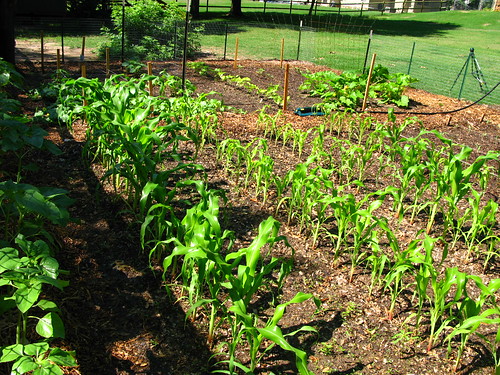
Before planning to start an organic garden, few basics have to be understood by every beginner. The biggest advantage in doing organic gardening is that it requires less maintenance, less time and cost. By understanding few guidelines and with the help of some basic advice any person can start organic gardening.
The first important thing needs to be considered for planning an organic garden is soil. The soil meant for the organic gardening must be healthy. One must testify the soil from a recognized soil lab before it is being used for the organic gardening. The Soil experts test the soil and will give you assurance about the quality of the soil and whether it can be used or not. Next step towards organic gardening is adding nutrients to the soil such as organic fertilizers etc.
One the most important nutrients that should be added to the soil are compost. The compost can be prepared in our garden or can be purchased from the market. There are some techniques for selecting the best compost; the fast compost is the most popular. By using fast composting technique the soil gets prepared within six to eight weeks. The other techniques of compost consume lot of time, so fast composting is recommended.
Tilling of the soil is done after the soil is ready for use. One can go for the option to till soil by hand or use technology like Machines. Hand tilling is considered much effective. After the soil has been tilled, next step is to sow the garden with organic seeds.
The last step is controlling those weeds and pests by using insecticides, organic pesticides and herbicides. All these above steps and guidelines can be further known by visiting the site myorganicfoodgarden.com that shares some more tips on growing your own healthy organic garden. Remember having an organic garden is not only risk free from harmful chemicals but also healthier to the body. So, why not visit the site and gather further information about organic food gardening.
photo source Oakley Originals